Boston Public Health Commissioner Urges Public Not to Rely on CDC for Vaccine Guidance
A major controversy erupted last week after the CDC abruptly revised its stance on vaccines and autism, prompting strong criticism from Boston’s Public Health Commissioner. The change raised concern among medical professionals and left many questioning the reliability of federal public health guidance.
Boston Health Commissioner Rejects New CDC Messaging
Ojikutu Tells Residents Not to Trust CDC Vaccine Guidance
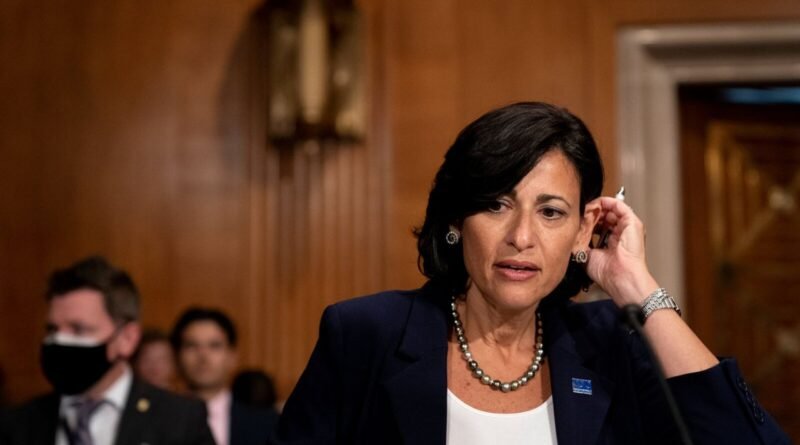
Boston Public Health Commissioner Dr. Bisola Ojikutu, who also teaches at Harvard Medical School, issued a direct warning to residents. She stated that the CDC’s updated statements on vaccines and autism are “false” and should not be trusted.
Ojikutu shared her reaction through posts on Facebook and Bluesky, saying,
“Under our current federal administration, the CDC is no longer a reliable and trustworthy source for vaccine information.”
What Changed on the CDC Website?
CDC Removes Definitive Claim That Vaccines Do Not Cause Autism
The CDC quietly updated its webpage, replacing the long-standing statement that “vaccines do not cause autism” with new wording claiming the phrase is “not evidence-based.”
The revised CDC page now says:
- Studies have not ruled out a connection between infant vaccines and autism.
- Research suggesting a link has been ignored by health authorities.
- The Department of Health and Human Services has launched a broad investigation into biological mechanisms and possible causes.
This shift did not go through the typical scientific approval process, according to a resigned CDC official who spoke to STAT News.
RFK Jr. Takes Credit for the Change
Health Secretary Claims Science Does Not Support Previous CDC Statement
Health Secretary Robert F. Kennedy Jr., who recently canceled $500 million in vaccine research, publicly took responsibility for the revised wording. He told The New York Times that the claim “vaccines do not cause autism” is “not supported by science.”
However, he also acknowledged that major population studies of the MMR vaccine and the preservative thimerosal found no measurable link to autism. Despite that, Kennedy reiterated that previous assurances that vaccines had been thoroughly tested were “a lie.”
His advisory panel also approved new restrictions on childhood vaccinations earlier this year.
Boston Health Commissioner Counters Kennedy’s Claims
Ojikutu Reaffirms Scientific Evidence
In her statement, Ojikutu firmly disputed Kennedy’s assertions:
- “There is no single cause of autism,” she wrote.
- Research into potential risk factors is ongoing.
- But decades of scientific data show no increased autism risk from vaccines.
She emphasized that numerous large-scale studies consistently demonstrate the safety of childhood vaccines.
Vaccines’ Lifesaving Impact
Ojikutu highlighted that vaccines have prevented more than 150 million deaths over the past 50 years, with infants making up the majority of lives saved. She reaffirmed that Boston’s public health department remains a trusted source of vaccine information and encouraged residents to avoid relying on the CDC website.
“We will continue to share accurate public health information because our communities deserve the truth,” she said.