
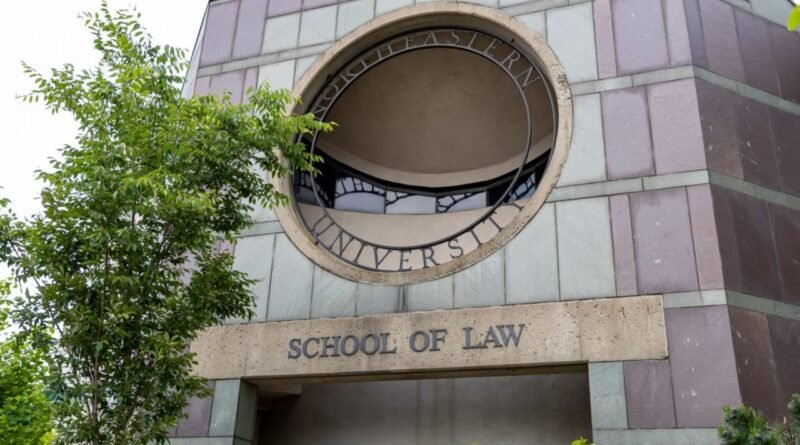
How Alumni United to Raise $1 Million and Rescue Northeastern’s Law School
The Northeastern University School of Law (NUSL) has a long and surprising history. What began as a small program linked to the YMCA in 1898 slowly transformed into one of the most distinctive and socially focused law schools in the United States. Its journey includes early struggles, a complete shutdown in the 1950s, a powerful alumni movement, and a remarkable reopening that shaped its modern mission.
Early Years of Northeastern University School of Law
A Modest Start in 1898
When NUSL first opened, it lacked prestige and operated with very limited resources. The school was originally connected to the Young Men’s Christian Association (YMCA), employing just five instructors. These teachers covered subjects such as criminal law, contracts, torts, property, and pleading, according to Northeastern’s historical archives.
Early Enrollment Numbers
In its first six years:
- 662 men enrolled
- 42 students graduated
- 37 were admitted to the bar
During this era, Northeastern’s undergraduate college was also very small. It would take several decades for the university to expand into the large, multi-campus institution it is today.
Growth, Inclusivity, and Transition to a Day School
A Night School Until 1930
For more than three decades, NUSL functioned as a night school, making legal education accessible to working individuals. By 1930, enrollment had grown enough to convert the program into a day school.
Inclusive Admissions During a Restrictive Era
At a time when most law students in America were white men, NUSL stood out by welcoming students who were often excluded elsewhere. This included immigrants, working adults, and women seeking new opportunities.
Professor Emeritus Brook Baker noted that the school’s flexible admissions made it especially appealing to women who had left the workforce to raise children and later wanted a respected career path.
The Closure of NUSL in the 1950s
Financial Pressure and Enrollment Declines
Despite its progress, the law school faced serious challenges in the early 1950s. Falling enrollment and growing competition pushed administrators to make a difficult decision.
- Northeastern’s overall enrollment rose from 4,790 to 13,164
- NUSL’s enrollment collapsed from 1,328 to just 196 students
This sharp decline convinced university leaders that the law school was no longer sustainable.
Shutdown in 1953–1956
NUSL officially closed in 1953, and after the final class graduated, the school fully shut down in 1956. The closure received support from local newspapers at the time.
A 1953 Boston Globe editorial argued that Northeastern needed to invest in areas “where the need is greater.”
The Boston Traveler echoed this, praising the university for focusing its strength in more impactful fields.
The Fight to Reopen Northeastern Law School
Alumni Refuse to Give Up
Former students strongly disagreed with the closure and immediately began organizing efforts to reopen the school.
The Board of Trustees set a strict condition:
Raise $1 million, and the school will reopen.
According to a historical document titled “Northeastern University School of Law: A Brief History,” the university promised to take steps toward reopening once alumni reached $500,000, and to fully reopen after the complete $1 million was raised.
Reopening in 1968
Alumni succeeded in their mission, and NUSL officially reopened in 1968 with:
- New funding
- A new dean, Tom O’Toole
- A fresh mission focused on public interest and social change
A New Vision: Social Change and Cooperative Education
New Requirements for the Modern NUSL
Then-President Asa Knowles established three requirements:
- A strong co-op program
- High academic quality
- A distinctive mission focused on service and justice
Responding to the Social Movements of the 1960s
Distinguished Professor Richard Daynard, who witnessed the reopening, recalled O’Toole’s vision. During a time when young people protested the Vietnam War and supported political movements like Eugene McCarthy’s campaign, O’Toole shaped NUSL into a school dedicated to public interest law and social reform.
The Co-Op Model: A Defining Feature of NUSL
Co-op as a Central Part of the Curriculum
As part of the reopening agreement, the law school had to implement a cooperative education program. This model, already a hallmark of Northeastern, became an essential part of the law curriculum.
The co-op system allows students to gain real-world legal experience through temporary placements at law firms and legal organizations. Today, NUSL is among the very few law schools in the United States that offer such a structured co-op program.
Unique Grading System
Unlike traditional law schools that use competitive letter grades, NUSL uses a pass-fail system supported by narrative evaluations from professors and co-op employers. This method encourages learning over competition.
The Modern NUSL: Inclusive, Cooperative, and Highly Ranked
A Supportive Learning Environment
Second-year student Micah Slade describes the school as inclusive and collaborative. Faculty actively guide students to work with peers who share similar interests and values, creating space for meaningful academic outcomes.
Impressive Results and National Recognition
Today, NUSL is recognized for:
- Being the #1 law school co-op program in the U.S.
- Achieving a 95.7% bar exam pass rate for first-time takers (July 2024)
- Maintaining a non-competitive, student-centered culture
Slade adds that the school does not promote rivalry but instead encourages students to excel without pressure.